



Sprained Your Ankle?
Try Physical Therapy!
August 2025 Newsletter
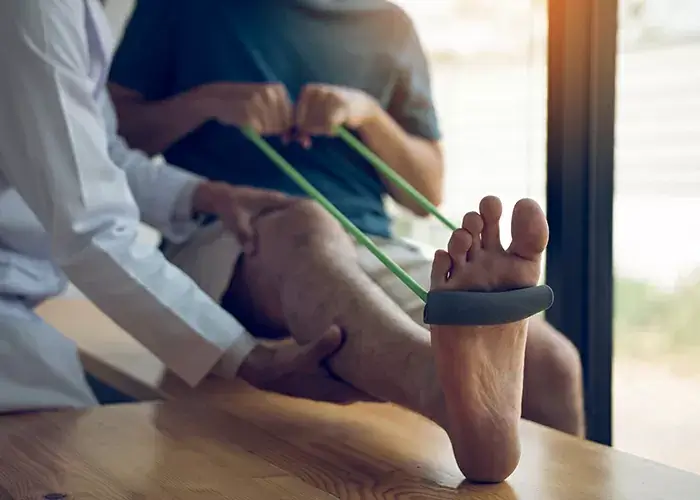
If you’ve never sprained your ankle yourself, you almost certainly know someone who has: ankle sprains are one of the most common orthopedic injuries, accounting for 15% of all sports injuries.
While most people see ankle sprains as minor injuries (think about all those movies where someone’s relieved an injury is an ankle sprain, not a broken bone), they still require care. Physical therapy is essential in creating the right environment for your ankle to heal, which can facilitate the process and help prevent future injuries.
Today, we want to share the story of one of our patients, a lifelong athlete we’ll call Jason. Jason sprained his ankle on the football field and sought treatment at H2Orthopedic to help him return to the game as quickly and safely as possible.
Keep reading to learn more about Jason’s injury and what our physical therapists did to help him. Or, if you’d like more personalized guidance, give us a call to speak to our friendly staff!
A Bad Fall and a Moderate Injury
Football players like Jason are at a high risk of ankle sprains because their sport requires them to run and quickly pivot across the field as they dodge opponents. Jason was in the middle of a scrimmage when he rolled his ankle, forcing the joint beyond its normal range of motion.
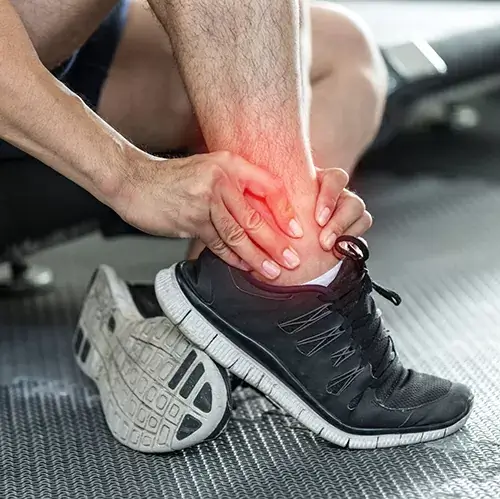
Jason knew immediately that something was wrong. He felt an intense, throbbing pain in his ankle, and when he tried to stand up, his ankle felt weak and unstable. The athletic trainer dressed his injury, correctly identified it as a sprain, and suggested he visit a physical therapist.
Jason came to see us a few days later. We determined that Jason had suffered a Grade 2 (moderate) sprain. Ankle sprains occur because the ligaments in the joint either overstretch or tear. The worse the damage to the ligaments, the worse the injury–and the longer the recovery time.
A Grade 2 sprain like Jason’s typically takes up to 6–8 weeks to heal and can take another several weeks to fully rehabilitate. We got him started on the process immediately.
A Personalized Approach to Recovery
Because Jason’s injury was so recent, we started with guidance on how to protect his ankle while staying as active as possible. Physical activity and movement ensure good outcomes after an ankle sprain.
But as he started to improve, we began work on his rehabilitation, guiding him through the recovery process:
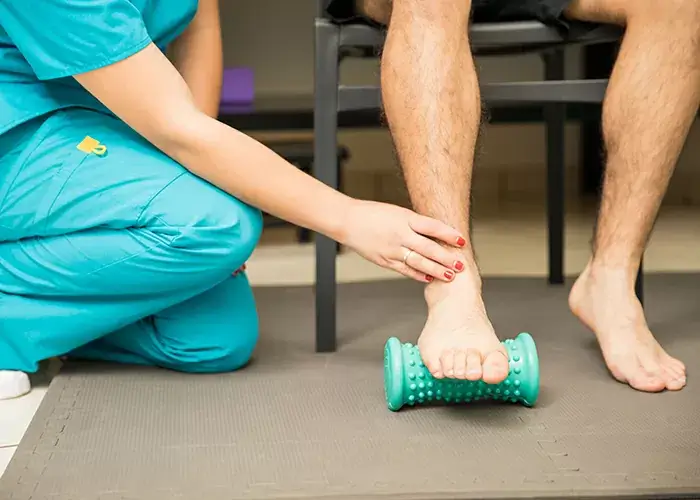
- Step 1: Pain Management and Mobility. We offer several all-natural alternatives to pain medication, including pain-relieving modalities and manual therapy. Manual therapy also helped Jason begin to work on his ankle’s mobility by gently guiding his ankle through its range of motion.
- Step 2: Active Mobility. Eventually, Jason graduated to more active mobility exercises. We showed him stretches and other exercises to restore his ankle’s range of motion. We also helped him stretch out his calf muscles.
- Step 3: Strength and Endurance. It was important for Jason to work on restoring and improving strength–not only in his ankle but throughout his leg.
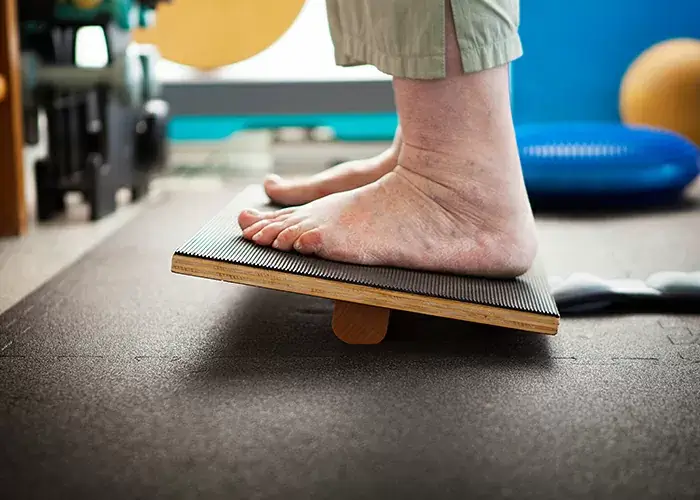
- Step 4: Functional Training. It wasn’t enough for Jason to restore strength. He also needed to retrain in various functional movements, including his agility and sense of balance. We also worked with him on football-specific movements.
- Step 5: Return to Sport. Although Jason felt fully rehabilitated, he needed to ease back into football. We provided him with a personalized return-to-sport program that allowed him to start training in a way that wouldn’t risk re-injury.
Jason’s treatment plan consisted of both in-clinic sessions guided by his physical therapist and an at-home exercise program to help boost his recovery.
When It Comes to Ankle Sprains, Don’t Skip PT
Ankle sprains rarely require surgery–but physical therapy is essential if you want to fully rehabilitate.
Why? Because someone who suffers one ankle sprain is likely to suffer another, and that’s especially true if they don’t go through rehabilitation. Because Jason took rehab seriously and worked hard to strengthen his ankle and leg muscles, he reduced his risk of future injuries. His efforts during rehab will help protect his ankle in the future.
Reach out to H2Orthopedic to learn how we can help you with your sprained ankle.

Our Patients Get Great Results
“The BEST! This group of therapists is professional, knowledgeable, friendly and just plain fun! They are the sum total of professional, efficient, effective, yet familial and fun. My sincere thanks to Erica, Wyatt, Michelle and Andy for their assistance in my treatments. Each provided their own unique perspective on therapy which allowed customized adjustments of the exercises to fit my specific body and needs. GREAT JOB to all. I highly recommend this group to others for their physical therapy needs.”
—Debora

Core Strength Made Simple: Expert Physical Therapy Tips
Have you noticed you don’t feel as balanced as you once used to? What’s the connection? These are both signs that may indicate core muscle weakness. At H2Orthopedic, our physical therapists can help you figure out if your core is affecting your condition and, if so, how to get it strong again!
Your core muscles help you do a lot — from sitting to standing to getting up and down from chairs. A strong core allows smooth, coordinated actions, thus impacting almost every activity you do every day. If your core muscles are weak, they may affect your function and possibly your pain levels.
It’s important to note that core muscles are not just important for physical fitness but are also essential to the overall quality of life. Our physical therapists understand the importance of core strength and will assess you to determine if it’s affecting your daily activities. With our expert guidance, you’ll learn how to engage your muscles the way they were designed to move!
Contact us today to set up an appointment or learn more about how our team can help you strengthen your core!

Your Road to Recovery Begins Now — Take Action Today!
It’s important to note that core muscles are not just important for physical fitness but are also essential to the overall quality of life. Our physical therapists understand the importance of core strength and will assess you to determine if it’s affecting your daily activities. With our expert guidance, you’ll learn how to engage your muscles the way they were designed to move!
Contact us today to set up an appointment or learn more about how our team can help you strengthen your core!

End of Summer Classic
Smash Burgers
Forget those thick, loosely packed patties that can sometimes turn out dry and uneven. The smash burger is all about maximizing surface area and creating that glorious, deeply caramelized crust that’s packed with intense, savory flavor. And doing it in an iron skillet? That’s pure Americana with a touch of old-school soul.
Ingredients
- 1 pound ground beef (preferably 80% lean)
- 1 teaspoon canola oil
- 1 teaspoon kosher salt, divided
- 1 teaspoon coarsely ground pepper, divided
- 4 hamburger buns
- Optional: Mayonnaise, sliced American cheese, sliced tomato, dill pickle slices, lettuce, ketchup and yellow mustard
Place a 9-in. cast-iron skillet over medium heat. Meanwhile, gently shape beef into 4 balls, shaping just enough to keep together (do not compact).
Increase burner temperature to medium-high; add oil. Add 2 beef balls. With a heavy metal spatula, flatten each to 1/4- to 1/2-in. thickness; sprinkle each with 1/8 tsp. salt and 1/8 tsp. pepper. Cook until edges start to brown, about 1-1/2 minutes. Turn burgers and sprinkle each with additional 1/8 tsp. salt and 1/8 tsp. pepper. Cook until well browned and a thermometer reads at least 160°, about 1 minute. Repeat with remaining beef.
Serve burgers on buns with toppings as desired.
Exercise of the Month
Modified Plank
Start on your hands and knees, then walk your hands forward slightly. Lower your hips so your body forms a straight line from head to knees. Hold your core tight throughout to strengthen your midsection.
Meet Our Team

Erika J.
PTA
Carissa V.
PTA
Michele B.
PTA
Nicki B.
Practice Manager
Wyatt W.
PT, DPT
Larry L.
PT, Co-Owner
Amy L.
MBA, LMT, Certified Pilates Instructor, Co-Owner
Stefan G.
PT, DPT, CILet’s Get You Better ASAP!
Contact us if you feel that your physical health or an old injury is holding you back from being active. Working with our physical therapists at H2Orthopedic can help you achieve improved balance and a healthy lifestyle.